Before Rhyme Cafe became a band, there was an idea for a tool: a home studio that could turn musical direction into complete recordings using local AI models.
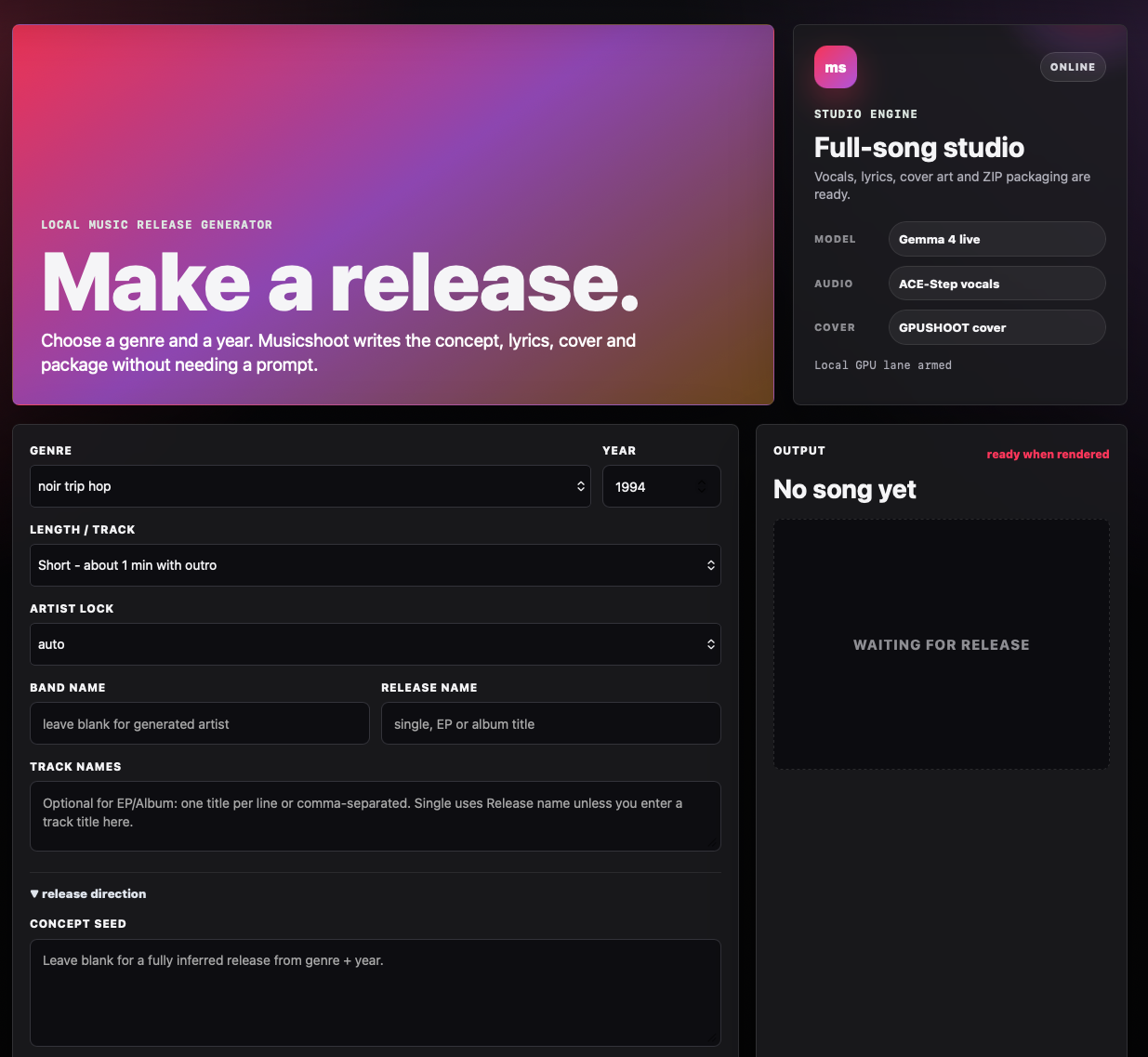
Musicshoot is that studio. It brings together song briefs, lyrics, musical settings, audio generation and a library of takes to review. It can also assemble songs, artwork and release files into one package.
Musicshoot, the studio where the project began. Song direction, local models and release tools in one interface. View full size ↗
Building it brought together Facundo Barrera’s experience as a musician and systems engineer. As the tool took shape, it opened a new creative possibility: build an AI band, give it a sound and a story, and develop complete records around that identity.
01 / BUILDING MUSICSHOOT
Musicshoot grew alongside the records.
A useful studio needs more than a Generate button. It needs a way to express an idea, compare results, keep what works and return to the exact source later.
Architecture & interface
Facundo designed the architecture and worked on the GUI: how a song is specified, how batches are launched and how takes are reviewed. A frontier model helped implement the software under his direction. Development involved repeated tests, revisions and changes prompted by the music itself.
Musicshoot was designed to produce a complete release: songs, artwork, lyrics, metadata and a download package. For these records, the working method changed to audio first: generate individual candidates, listen, revise and select. The covers were developed separately. Each take kept its settings, seed and source identity so it could be traced later.
A repeatable musical identity
One promising take became a reference for the next. The artist’s listening notes and audio analysis shaped reusable instructions for instruments, vocal balance, rhythm and arrangement. Those references guided the text sent to the models; they did not clone a singer or guarantee the same performance.
The artist listened and rejected takes that lost the groove, overpowered the band with vocals or wandered away from the album’s sound.
Designed from a musician’s point of view
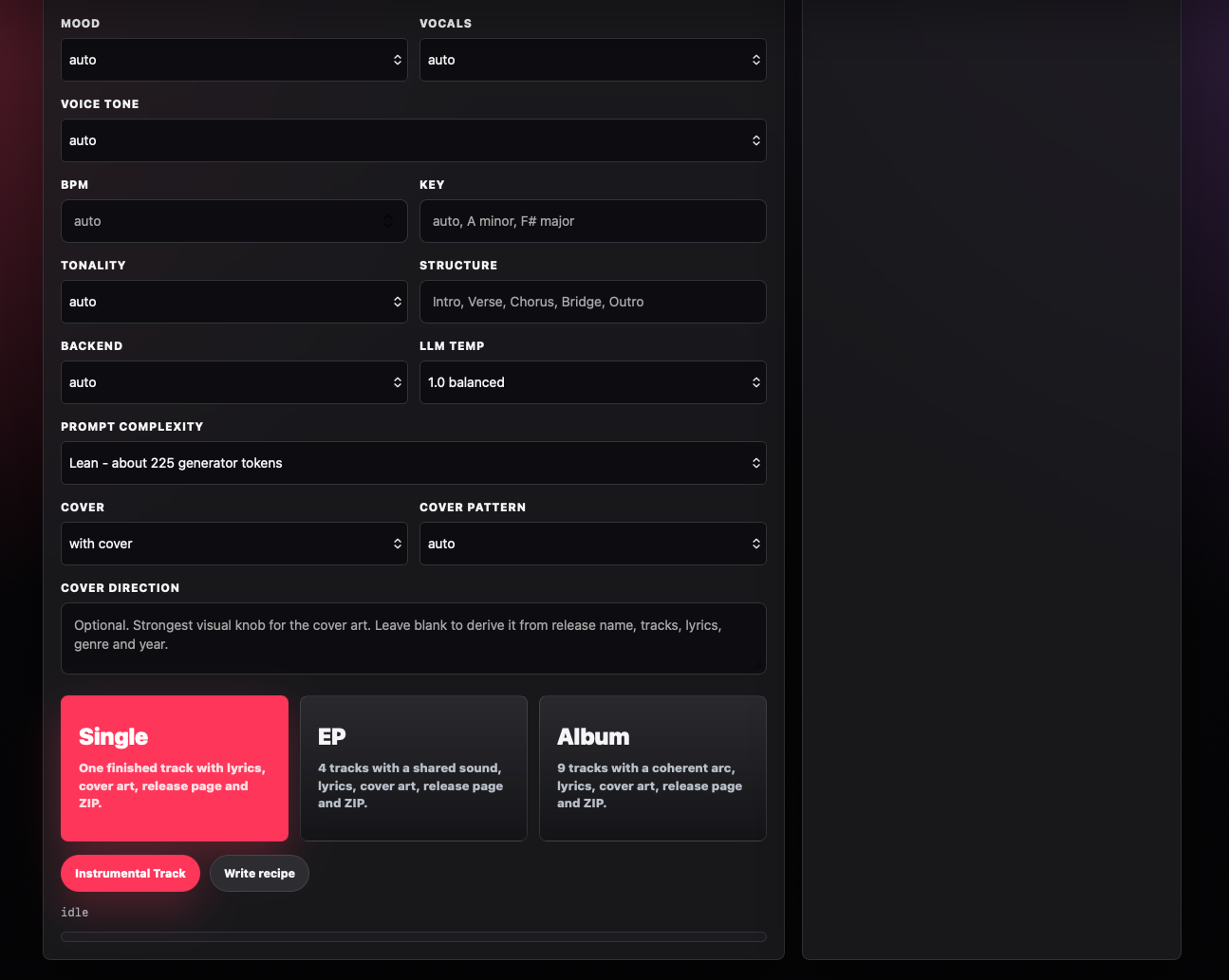
Facundo chose Musicshoot’s knobs and fields deliberately, drawing on his experience as a musician. Key, tonality and scale, tempo (BPM), vocal character and song structure gave him ways to express the musical decisions he wanted to make. The direction fields added room to describe the beat, groove, instrumentation and arrangement. His musical knowledge shaped both the interface and how he used it to guide each track.
Explore Musicshoot’s musical controlsFrom vocal character and song structure to cover direction and release format. These controls shaped the tool; the records were built through directed batches and repeated listening. View full size ↗
ONE REAL SOFTWARE FIX
During Chameleon Party, a lean audio prompt setting also shortened the local text model’s writing budget. Recipes could arrive incomplete and fall back to generic lyrics. The fix separated the two budgets: concise instructions for audio generation, enough room for a complete song recipe. Engineering changed what came out of the speakers.
Musicshoot made it possible to explore sounds beyond the artist’s usual playing and listening habits, including soul, funk and hip hop. Rhyme Cafe grew out of that exploration: an AI concept band with nine fictional musicians and a real musician directing the work.
Give the music an identity
The band needed more than a name. Its voices, instruments, characters and visual world had to belong together. The artist shaped that identity and used it to guide the recordings, then listened for the performances that made it convincing.
Build records around ideas
Chameleon Party explored social masks and changing identities through dusty boom-bap grooves. Invisible Moves took the project into disco, funk and soul. Each began with a concept that guided the songs, lyrics, sound, sequence and artwork.
The result was a complete musical project: a band, two records, cover art, booklets and a website, developed through repeated creative and technical decisions.
03 / THE ENGINEERING
A home GPU. A carefully managed workload.
An AMD Radeon RX 6900 XT with 16 GB of VRAM powered local audio and cover-image generation. Musicshoot’s interface and the production utilities ran on the other home machine. Making that setup useful meant controlling what ran, when it ran and how much memory it could leave for the next job.
16 GBGPU memory
14 tracksSelected for two records
One directionThe artist’s musical vision
€300 is the artist’s approximate cost for the graphics card, not the total cost of the computers or studio.
RADEON RX 6900 XT16 GB VRAM
GPU
LOCAL MODEL WORKSPACE
GemmaResident text model
ACE-StepVocals + instruments
Working space
ONE GPU · WORKLOADS IN STAGES● ● ●
STAGE 2 / GENERATE AUDIO
The music gets its turn.
For each candidate, Musicshoot receives Gemma’s recipe and lyrics, checks them and sends the audio request to local ACE-Step. ACE-Step renders the vocals and instruments. Gemma stays resident with reduced context; cover-image jobs wait.
Illustrative VRAM layout, not a measurement or a live monitor. Block sizes are schematic; allocations vary. These blocks represent model workloads, not Docker containers. Audio and image batches run separately.
ARTIST + FRONTIER MODEL
The artist directs the music and tools; the frontier model helps implement the software and write batch scripts.
→
HOME APPLICATION HOST
Musicshoot requests recipes, checks the results, dispatches audio jobs and keeps the take library.
↔
HOME GPU HOST
Gemma returns recipes and lyrics. ACE-Step renders audio. DreamShaper generates cover candidates in separate sessions.
The frontier model helped build the studio and turn the artist’s direction into batches of musical briefs and variations. Local ACE-Step generated the records’ vocals and instruments. Musicshoot coordinated the calls to Gemma and ACE-Step; GPUSHOOT handled the separate cover sessions with local DreamShaper. Mastering and packaging used local CPU tools.
04 / FROM IDEA TO RECORDING
Every song had to earn its place.
Define the song
Start with the artist’s idea: what the song says, how it feels, and where it belongs on the record. Set the main lyrical lines, voice, rhythm, instrumentation and structure.
Write the batch instructions
Under the artist’s direction, the frontier model helps write scripts with a brief for each song and controlled variations in arrangement, voice, tempo, key and seed. The scripts submit individual candidates to Musicshoot.
Ask Gemma for the recipe
Musicshoot sends the brief and sound constraints to local Gemma. Gemma returns structured text: the musical description, lyrics, tempo, key and song sections. Supplied lyric lines can be kept exactly as directed.
Check, then render with ACE-Step
The recipe returns to Musicshoot. The app checks it, applies the musical and lyric rules, and sends the prompt, lyrics and settings to local ACE-Step. ACE-Step produces the audio; Musicshoot saves the take and its production details.
Listen, revise, repeat
Check the beat, vocal character, balance and development. Keep useful ideas, revise the instructions and render again. Automated measurements help locate problems; listening determines whether a take works.
Curate & arrange
Choose the final candidates, refine openings and endings, and shape the running order. A strong song also has to work next to the songs around it.
Finish & verify
Advise on tonal balance, vocal presence, dynamics and stereo width. Compare masters, check peaks and loudness, audition transitions, then prepare the final audio and metadata.
This was the main recipe-writing flow. Some experimental retakes reused a fixed recipe without asking Gemma to rewrite it, so a useful idea could be tested with different seeds.
05 / TWO DISTINCT PRODUCTION CHALLENGES
Inside the records.
These notes follow the actual production records. Open a song to see what shaped its direction or final edit.
CHAMELEON PARTY / 10 TRACKS
Keep the body moving. Let the story turn inward.
The concept was a room full of social masks, survival poses and changing identities. The word “Party” was deliberately ironic. Dusty boom-bap drums, warm Rhodes, rounded bass and contrasting voices gave the album its shared language.
Lose It All emerged from an early EP-generation run and became the first anchor. The working method then shifted to individually curated singles. Better Than Me added a second reference for vocal and groove balance, while later batches varied the openings and rap placement to avoid repeating the same song shape.
199 original WAVs audited. Ten source recordings selected for the final release. The source audit matched all ten to their originals.
01Lose It All+
The first accepted take became the album’s sonic reference: a 94 BPM, A-minor blueprint, dusty drums, warm Rhodes, rounded bass and layered vocal hooks. Its groove, balance and energy shaped the instructions for later songs.
02Better Than Me+
A catchy, repeating opening and a more restrained mood gave the album its second reference. The production sought a close male lead, a clear song structure and equal weight between the voice and the band. Its central lyrical idea treats defensive ego as a mask.
03No Station Left+
The working map called for rhythm and rap to return after the more restrained second track. Its narrative role was to bring hope back into the sequence and pull the listener toward the rest of the album.
04Blooming Tale+
The song was renamed during development to sharpen its identity. The direction combined a coming-of-age theme with a warm, protective groove: Rhodes, bass and dusty drums, with restrained rap responses over the full band.
05Feelings+
The production brief paired emotional confession with physical movement. The track had to make room for the subject without letting the rhythm or bass lose their hold on the listener.
06Curtain Call+
The mid-album pause was built around fear before revelation. The selected take kept an unusual cassette-glitch opening, a repeating Rhodes figure and a collective-sounding chorus over a steady dusty beat. Its place in the sequence also exposed a need for more varied openings later in the album.
07I Am Available+
The direction used Better Than Me as a close reference, but brought the singer in immediately. The aim was a dry, conversational voice, continuous rhythm and a clear song shape, giving the second half a fresh entrance.
08Ticket To Mess+
This track was conceived as a physical lift after the emotional middle: swinging boom-bap, forward drums and bass, and short Rhodes accents. The selected source was cut to 149 seconds for the final sequence.
09The Others+
The brief kept a clear chorus and a heavy, inward-looking groove as the lyric turned from blaming others toward self-recognition. Alice Inpain is the guest vocal character. The transition into the closer was checked separately because this song ends quietly.
10Till You Make It+
The closing direction brought bass, snare, rap energy and a strong sung hook forward. The first 15 seconds of the selected source were removed, followed by a ten-second fade-in at the new start. The transition from The Others was auditioned and measured.
Making ten songs feel like one album
The final v4 mastering pass used the local Mastershoot stack. The focus was continuity, tonal balance, vocal and bass control, subtle stereo width and brightness. The delivery checks covered 44.1 kHz stereo, 16-bit FLAC, no digital clipping and album transitions. Reported final loudness ranged from about −13.47 to −14.50 LUFS, with true peaks around −1.03 to −1.24 dBTP.
This EP explored disco, funk and soul through a tight band: fingered bass, clean rhythm guitar, Rhodes or Clavinet and a steady dance pulse.
The model repeatedly lost or disrupted that pulse. Strong voices and attractive sections were not enough. The production involved focused retakes, simpler arrangement instructions and careful listening to find performances that held together.
One useful change was to begin inside the full groove. Elaborate intros and transitions could invite the model to break the rhythm. The project was reduced from a planned ten-track album to a four-track EP, built around the performances the artist chose to keep.
01Brothers In Groove+
The selected performance established the EP’s pocket: rhythmic fingered bass, moving hi-hats and a vocal timbre the artist wanted to keep. Final production preserved the unexpected piano outro, fading it from 2:44, and gently controlled a vocal-presence rise around 1:56–2:02.
02Perpetual Beat+
The selected take kept the dance-floor pulse and a controlled vocal. Final work cleaned up the tonal balance and opened the high end without pushing the singer further forward. The aim was to preserve the relationship between voice and groove.
03Full Half-Circle+
This song went through repeated retakes after the artist heard tempo pushes and broken rhythmic passages. Promising attempts supplied clues for the next batch, but the final source was a later Rhodes-and-guitar take. The final master gently reduced a vocal-presence push around 1:47–1:56.
04Hope You Are OK+
A soul-pocket take was chosen for the closer. The finishing pass used more targeted vocal control than the other songs, with corrections in several passages. The final fade runs from 2:17 to 2:34, where the recording ends.
Preserve the groove. Control the voice.
The final release script applies individual EQ, de-essing, restrained stereo widening and targeted vocal-presence corrections. Its loudness targets sit around −14 LUFS. Fades and endings were chosen per track, rather than imposed as one setting across the EP.
After the audio-candidate sessions, Facundo developed the covers in separate GPUSHOOT batches using local DreamShaper. He designed the visual concepts and directed the image generation. Composition, colour, expression and mood were revised across candidate batches; he selected and curated the final artwork.
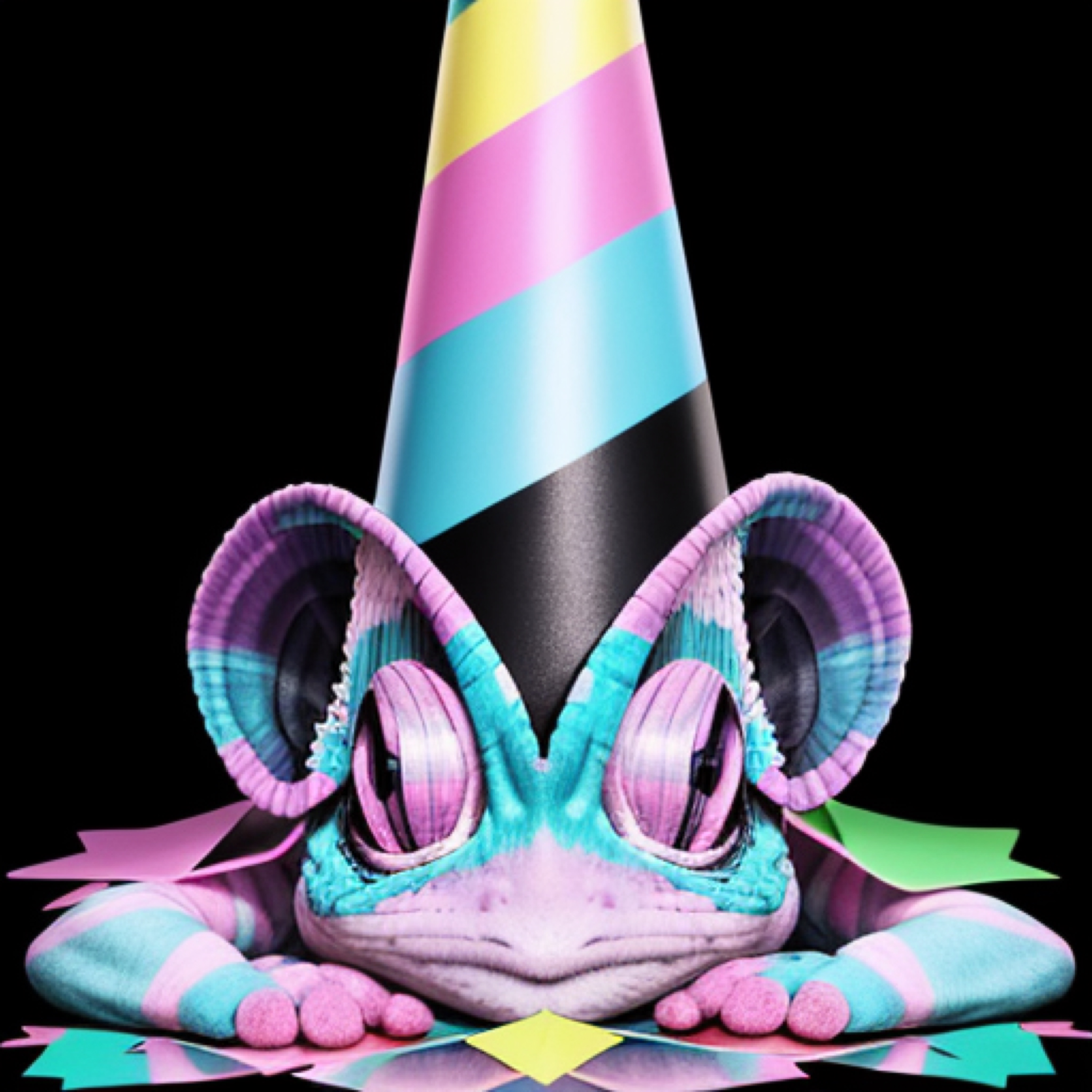
Chameleon Party’s cover went through specific refinements: a recognisable chameleon, direct eye contact, a playful expression, party hat, confetti and coloured lights against black. The final image came from a documented DreamShaper batch and was prepared as a 3000 × 3000 RGB JPG.
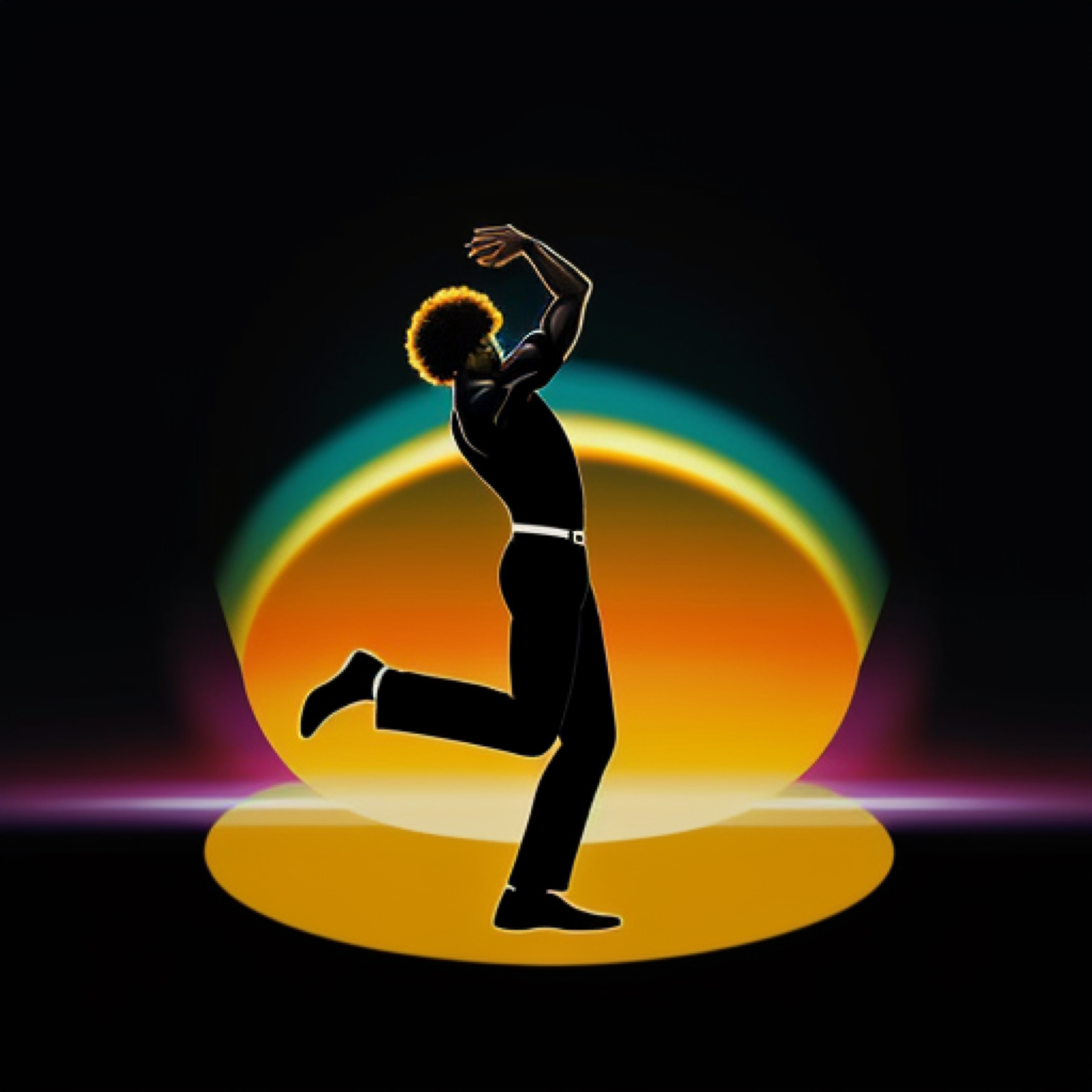
Invisible Moves took a different route: an adult male dancer in silhouette, a glowing sun and vivid retro colours. Its local DreamShaper instructions focused on pose, motion and a clean graphic composition.
Identity, packaging & website
The artist defined the band name, album concepts, track names and sequence, characters and visual direction. Those choices connect the music to the covers, booklets and the band’s fictional world.
The release work included final WAV, FLAC and MP3 files, cover embedding, metadata, lyric sheets and quality-control reports. Source recordings, selected takes and production scripts were retained so the process could be traced.
This website is also his design, implemented with AI-assisted development. Its dark visual language, record sleeves, animated booklets and readable lyrics bring the finished project together as a band people can explore.